Google June 2026 Spam Update Review: The AI Enforcement Era Has Arrived
Google completed its 2026 Spam Update Review on June 26, rolling out enhanced SpamBrain detection across all languages and locations.
But this isn’t just another routine spam sweep. For the first time, Google’s spam enforcement explicitly targets manipulative tactics within AI-generated search results—marking a fundamental shift in how the search giant protects its AI-powered experience.
What’s Different in the 2026 Spam Update Review
Unlike previous spam updates that focused primarily on traditional ranking manipulation, the June 2026 update introduces AI-specific spam detection.
Google announced on June 24 that SpamBrain, its AI-powered spam detection system, has been enhanced to identify and demote content designed specifically to manipulate AI Overviews and AI Mode responses.
Search Engine Journal reported that enforcement against AI answer manipulation presents unique challenges. While traditional spam detection can leverage established signals like link patterns and content quality metrics, AI-generated spam often mimics legitimate content more convincingly, making enforcement inherently difficult.
The timing aligns with Google’s May 2026 AI Optimisation Guide, which explicitly warned against attempting to manipulate AI citations. The message is clear: techniques designed to trick AI systems face the same penalties as traditional spam—possibly worse, given the heightened scrutiny on AI-generated content.
The Spam Tactics Under Fire
Google’s recent Search Central blog posts identified several manipulative practices now under increased scrutiny:
**Back Button Hijacking** gained explicit attention in April 2026, when Google flagged techniques that manipulate user navigation to inflate engagement metrics or distort analytics. For AI systems that factor user behaviour into ranking signals, such manipulation represents a direct attack on result quality.
- **Inauthentic Mention Seeking**—the practice of attempting to generate artificial brand citations across the web to boost AI visibility—received direct condemnation. Google’s official guidance stated that attempting to manipulate AI responses through manufactured mentions violates core spam policies.
- **AI-Generated Content at Scale** remains under fire, but with a nuanced twist. Google’s guidance on generative AI content clarifies that mass-produced content lacking genuine value faces penalties regardless of how it was created. The emphasis shifts from *how* content was made to *whether* it serves user intent.
The AI Visibility Double-Standard
Perhaps the most significant implication: sites that once escaped traditional penalties by ranking well in conventional results now face AI-specific consequences. A page ranking #3 for a competitive keyword might previously have avoided spam flags if engagement metrics remained positive. That same page, if its content is being cited in AI Overviews with low-quality signals, now risks demotion across both traditional and AI search results.
This creates a new risk profile for SEO practitioners. Success in AI search requires not just ranking well—your content must withstand scrutiny when presented as an authoritative answer to user questions.
 What This 2026 Spam Update Review Means for Your Strategy
- **Audit AI-Cited Content First**: Identify pages currently appearing in AI Overviews or AI Mode. These are your highest-risk assets. Review whether this content provides genuine depth, original insight, and clear answers to likely follow-up questions. Set up AI visibility tracking to monitor which pages Google selects as authoritative sources for your target queries.
- **Eliminate Behavioural Manipulation**: Remove any techniques designed to manipulate dwell time, click-through rates, or navigation patterns. Back button hijacking, exit-intent overlays designed to distort bounce rate, and similar tactics create AI visibility risk. Google has now explicitly linked behavioural manipulation to AI spam penalties, closing a loophole that allowed some sites to rank despite questionable engagement patterns.
- **Ditch Mention Manipulation**: Any strategy focused on generating inauthentic brand mentions—whether through guest posting networks, review manipulation, or mention-for-mention exchanges—violates both traditional spam policies and the new AI-specific guidance. Google’s AI systems cross-reference brand authority across thousands of sources, making synthetic authority increasingly detectable.
- **Quality Over Quantity, Reaffirmed**: Google’s spam enforcement has consistently tightened around mass-produced content. The AI dimension simply amplifies the consequences. Thin content, auto-generated summaries, and derivative compilations face elimination from both traditional and AI search results. The bar for what constitutes “useful content” has risen as Google seeks to train its AI systems on genuinely valuable information.
Recovery If Affected By The 2026 Spam Update Review
If your site experienced ranking drops following this update, Google advises waiting for the full rollout to complete (now confirmed finished) before assessing impact. Review your content against the spam policies, address any clear violations, and ensure your content genuinely serves user intent.
The window for AI manipulation tactics has closed.
Sites that built visibility through AI-specific gaming will face continued pressure as Google’s detection systems grow more sophisticated.
Join Our Mailing List To Learn More About SEO Tactics
 |
|
|
|---|
Sources
– Search Engine Journal: Google Spam Update Now Reaches AI Answers (June 2026)
– Google Search Central: Spam Updates (official documentation)
– Google Search Central: AI Optimization Guide (May 2026)
– Google Search Central: Back Button Hijacking Policy (April 2026)
– Search Engine Land: Google Releases June 2026 Spam Update
– Momentic Marketing: June 2026 Spam Update Analysis
– Launchcodex: Google June 2026 Spam Update Guide
– Search Engine Roundtable: June 2026 Spam Update Coverage*
The Article Google June 2026 Spam Update Review was first published on https://marketing-tutor.com
The post Google June 2026 Spam Update Review first appeared on termspec.


 Google began rolling out AI performance reports in Search Console during May 2026. These reports show how your content performs in AI Overviews and AI Mode—something SEOs have requested since generative search launched.


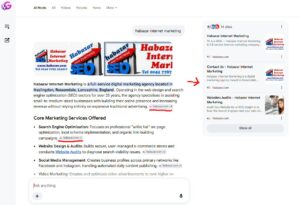
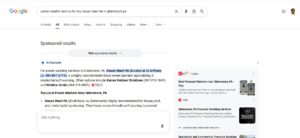 Given this new paradigm, here is the action plan for local SEO practitioners and business owners.

 Authentic first-person experience. Reddit content almost exclusively comes from real people sharing genuine experiences. Questions get answered by people who have *actually* solved the problem. This directly matches Google’s stated preference for Experience in its EEAT framework.
 This doesn’t mean spamming subreddits. Instead:

 Google confirmed the May core update completed on June 2nd after an 11-12 day rollout. Unlike routine refreshes, this update produced measurable volatility across multiple verticals.
 The AI Search Paradox measurement creates a strategic fork.

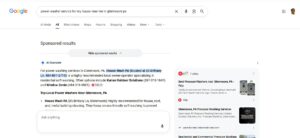 The new interface treats every query as an opportunity for AI to synthesise an answer, not just return a list of links. VentureBeat reported this signals Google’s commitment to making AI-mediated answers the primary search experience.
 Three forces compound during this update:

 The Princeton GEO study emerged from a simple observation: AI search platforms were transforming information discovery, yet no systematic methodology existed for improving visibility in these new environments. Traditional SEO research measured ranked search results. The researchers asked a different question—what makes content citation-worthy when AI systems synthesize answers from multiple sources?
 Simplifying complex explanations improved citation rates for technical and specialized content. AI systems demonstrate preference for accessible explanations over dense technical prose, likely because accessibility indicates the source genuinely understands the topic rather than merely referencing it.
 Implement earned media distribution strategy. Identify authoritative publications in your industry where content distribution strengthens credibility signals. Quality distribution across trusted sources produces multiplicative effects on AI citation rates.

 This isn’t a temporary fluctuation. AI systems select content based on different signals than Google’s traditional ranking algorithm. Where traditional SEO rewarded link equity and domain age, AI systems prioritize content authority, answer quality, and entity clarity. Google’s own documentation confirms that AI Mode and AI Overviews use “strong ranking signals” alongside “trust signals”—but these aren’t the same signals that kept you at position #1.
 1. Answer-First Content Structure

 Traditional SEO metrics measure how well a page ranks for specific queries. But AI Overviews don’t pull from the same ranking signals. Google’s AI systems evaluate pages on factors that overlap partially with traditional SEO but diverge significantly in weight and priority.


 EMARKETER’s Kelsey Voss defines the shift precisely: *”SEO is about ranking pages for clicks, while GEO is about being selected as a source in synthesized answers.”*